
“Four days without food…how much longer can I survive?”
Lying quietly on a thin mat, Nancy watched as the monsoon rains forced their way thru cracks and holes in the tin roof of her small hut. The leaks were by far the least of her problems. The hunger was ever present, gnawing away at the void in her stomach, from dawn to dusk. The ache for food pounded through her body like her heart working overtime.

Four days…how much longer could she hold on? How would she find the energy to care for her family? To search for food? How were they to keep on?
Her husband unemployed, her small family no stranger to hunger…but this time there seemed no hope for a way out.
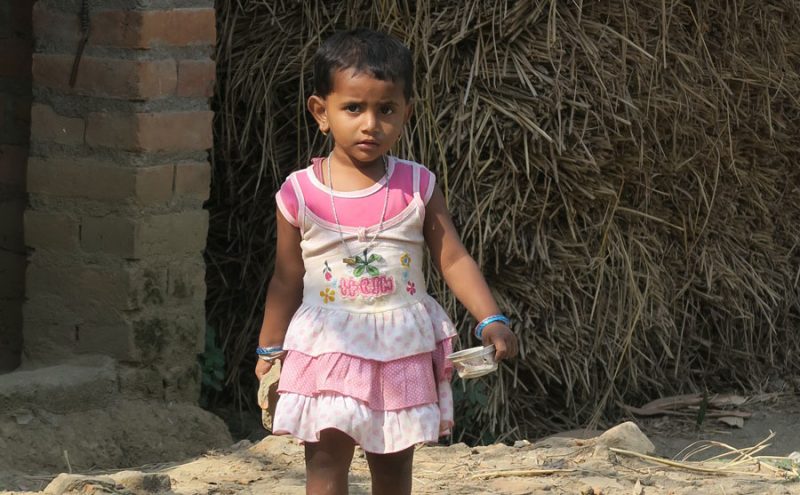
She watched as her young children played in the sweltering, muggy heat. Her mother’s heart agonized while watching them, knowing that in spite of giving up her food, they still longed for more. Tiny bellies extended, she again wondered at how they could continue on. Just last week, her friend’s tiny daughter succumbed to starvation. Their small and destitute community mourned, but all were well aware that many of their own children were at the same risk.

The nation of Niger, on the edge of Africa’s Sahara Desert, is ranked at the very bottom of the United Nation’s Human Development Index. Approximately 90% of its inhabitants live in multi-dimensional poverty, and nearly 10% of children die before the age of 5.
Near the capital city lies a collection of small villages, visited regularly by Lisa, a dedicated woman who shares Bible stories among the Fulani residents. In a country that is 94% Muslim, over 99% of the herding Fulani people are committed Muslims, yet some of the men have been very responsive to the Word of God, and the village women have begun to gather to listen as well.
That same week, an idea was born.
Nancy watched as her children ran out of the hut to greet Lisa. Rising to her feet, she greeted her friend. Tears of hopelessness streaked unbidden done her cheeks, just like the raindrops that pushed their way through her roof. Frustration added to her pain as she knew she had nothing to offer to her friend.
Lisa listened quietly as Nancy as she poured out her fear, hopelessness and discouragement. Her circumstances were shared by many in the community and were familiar to Lisa. But this time, she had an idea. Hope began to light Nancy’s eyes as she listened to Lisa’s idea. The simplest of dreams-having food to feed her family—began to look possible. Her heart beat with determination and anticipation as she began to gather materials.
Nancy was commissioned to weave some grass mats for an American colleague, in the style the Fulani use as bowl covers. In North America, these lightweight, handmade mats are great as table centers, trivets, placemats, decorative wall hangings, and the larger size is great under a pizza pan!
Nancy wore a big grin as she showed off what she had bought with the money she’d made from her first sale: a sack of millet, batteries for her flashlight, and soap! Excitement bubbled over as she rejoiced in her ability to provide in a small way for her family. This dream of feeding her family had grown beyond simply purchasing food to being able to buy some basic necessities! This was more than expected and her joy could not be contained!
Another order was placed and she recruited her sister, Bea. Even more orders came in and their sister, Isobel, joined them. The three ladies are now proud of their work and delighted to be able to feed their children!

Nancy has since replaced the dreadful leaky house with a clean, new hut.
She and her sisters work together to fulfill the orders. They continue to dream of not only what their future holds, but the future for their children.
Extend mercy by visiting our store and helping Nancy, Bea and Isobel continue the effort to support their families by the purchase of their mats.

Leave a Reply